Last updated:
A heat pump here spends most of the year cooling and drying the house, then has to switch over and heat it on the first cold morning after months of rest. Maintenance is what keeps both of those jobs ready, and it matters most in the parts you never see: the coil, the drain and the switching that turns cooling into heat.
Sweet Olive maintains ducted heat pumps in homes across New Orleans. On a maintenance visit we clean the outdoor coil, flush the condensate drain, tighten and test the electrical parts, and run the system in cooling and heat. Every reading goes on a visit record you keep, so the next visit can compare against it.
If the system has already stopped cooling or heating, you need a repair visit instead. If you want an honest look at an unfamiliar system before deciding anything, a heat pump inspection fits better.
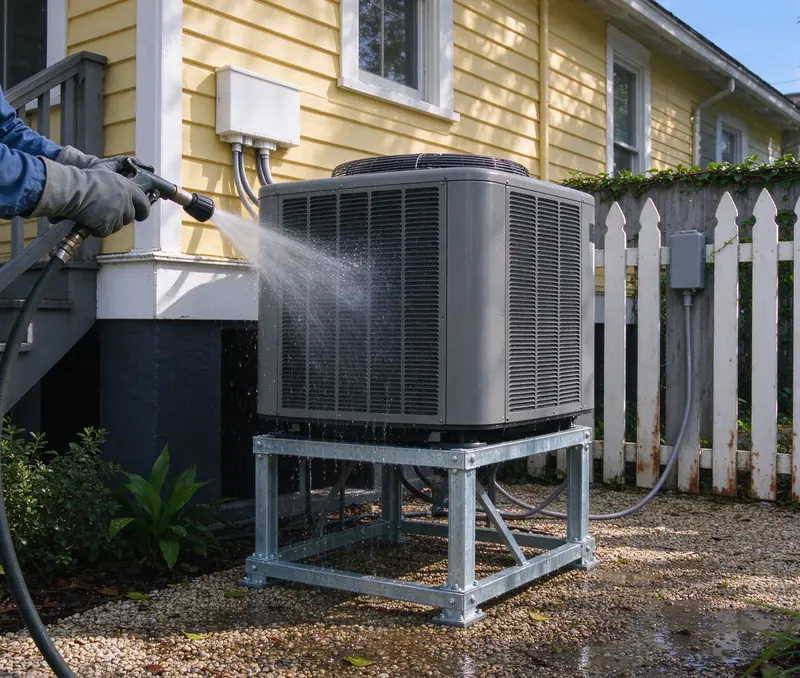
What a fall maintenance visit in Algiers Point looks like
A small system that had cooled all summer and not heated since spring: the checks that got it ready for the first cold morning.
- Location
- Algiers Point, New Orleans
- Home
- Raised single-story cottage, about 1,300 sq ft, two bedrooms
- System
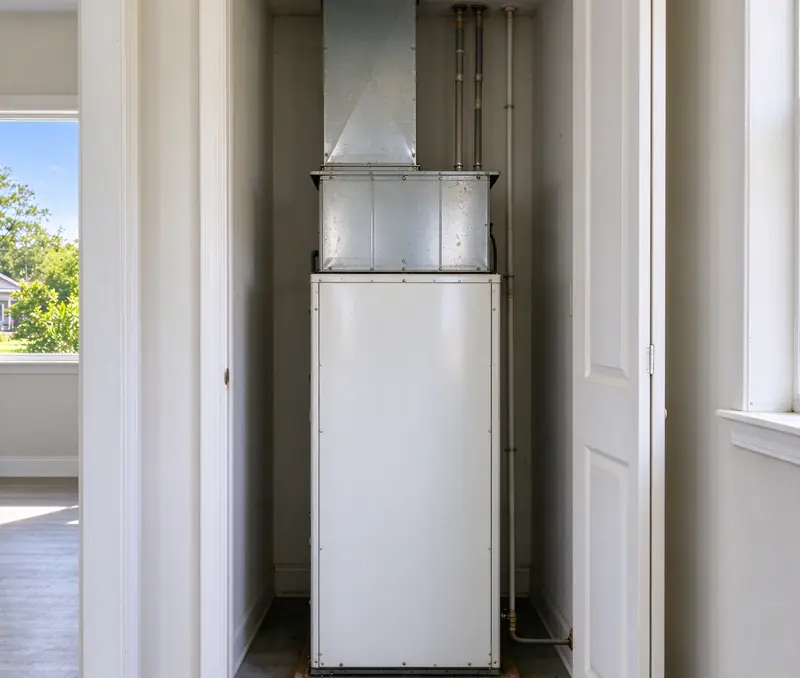
- Nominal 2-ton heat pump, closet air handler with a 5 kW heat strip
- Visit
- Fall service, before the heating season
- Outdoor unit
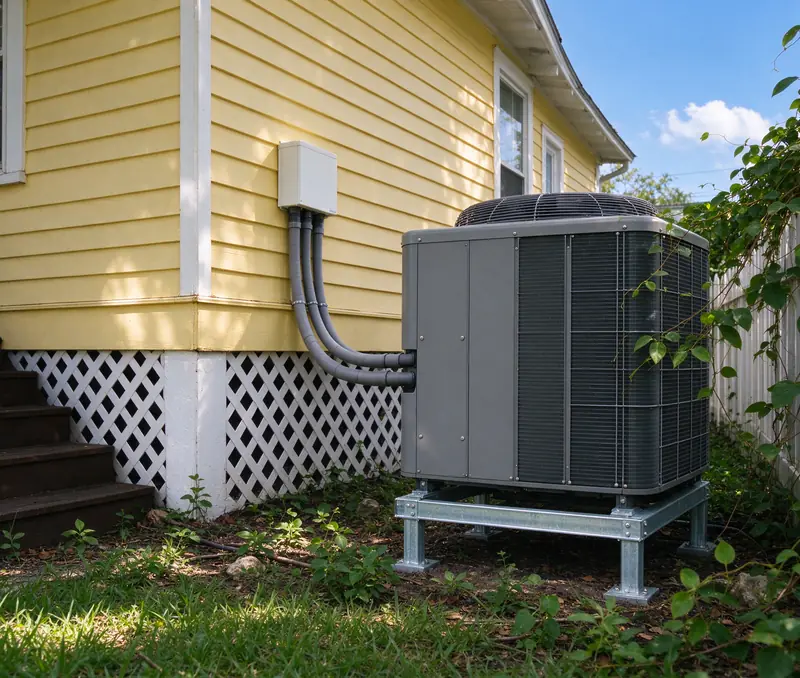
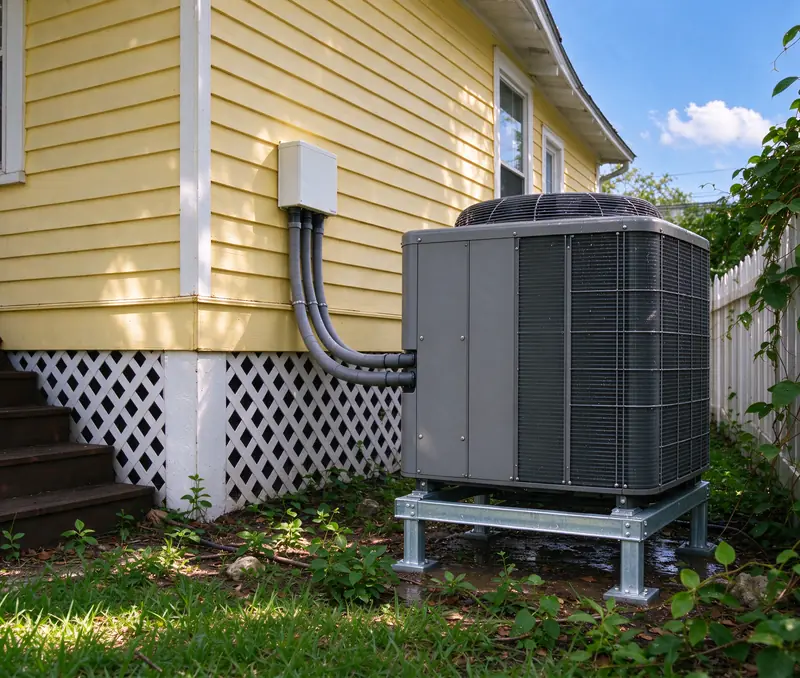
- Beside the side steps, a vine reaching the coil
- Heat checked
- Heat mode, defrost and the heat strip
- Project price
- $165
- Duration
- One visit, about 2 hours
The house
A cooling season behind it
The house was a raised cottage in Algiers Point, about 1,300 square feet, with a two-ton heat pump, a closet air handler and a five-kilowatt heat strip. The system had cooled the house since May and hadn't run in heat mode since spring. A vine on the side fence had grown into one face of the outdoor coil.
The plan
Heating checks, not just a filter
The fall visit put the weight on the heating side: the reversing valve, the defrost cycle and the heat strip. The cooling season had left its own work behind, so the condensate line and the outdoor coil got attention too. We booked it as one visit with the checks listed beforehand.
The visit
Coil, drain, electrical, then heat
With power off at the disconnect, we cut the vine back from the cabinet, rinsed the coil from the inside out at low pressure and straightened bent fins. Inside, we fitted a new 16-by-25-inch filter, flushed the condensate line and tested the float switch. We tightened the electrical connections, read the capacitor and the amp draw of the compressor, fan and heat strip, then switched to heat and forced a defrost cycle to watch it change over and recover.
The record
What the owner kept
Every reading went on the visit record, along with one note: the capacitor read at the low edge of its rating, worth checking again at the spring visit. The aim was a system that heated the first cold morning without the strip carrying the whole load.
Why a heat pump needs two kinds of attention
One set of equipment does two jobs here, and each season wears on different parts.
Before the cooling season
Spring, ahead of the long, humid summer.
- Outdoor coil cleaned so it can shed heat
- Drain flushed and float switch tested before months of condensate
- Amp draws and capacitor checked before the heaviest load
- Airflow checked so the coil dries the air
Before the heating season
Fall, ahead of the first cold snap.
- Reversing valve switched to heat and checked
- Defrost cycle run and watched
- Heat strip amp draw measured
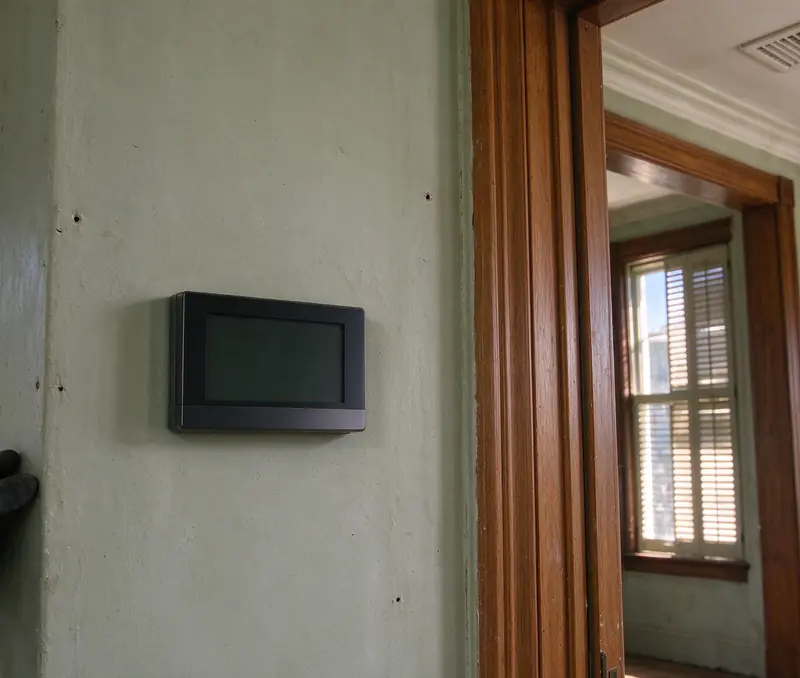
- Thermostat backup heat settings checked
One visit a year covers the side you rely on most. Two cover both.
What the summer leaves behind
Through a long cooling season the indoor coil sends water down the condensate drain day after day, and algae and dust slowly narrow the line. The outdoor coil collects pollen, grass clippings and leaves. Neither shows until the drain overflows or the system starts losing ground on hot afternoons. Our humidity guide explains why so much water comes off the coil here.
What we check on a maintenance visit
The checks for your visit are listed before we book it. This is what each one is for.
| Check | What we do | Why it matters |
|---|---|---|
| Outdoor coil | Clean, rinse from the inside out, straighten fins | A dirty coil can’t shed heat, so the system runs longer and harder |
| Condensate drain | Flush the line, clear the trap, test the float switch | A blocked drain is a common cause of water through a ceiling |
| Electrical | Tighten connections, read the capacitor, inspect the contactor | Loose or failing parts are behind many summer breakdowns |
| Amp draw | Measure compressor, fan, blower and heat strip | Readings that drift from the nameplate point to wear early |
| Heat mode | Switch over, check the reversing valve and a defrost cycle | The heating side sits idle for months before it is needed |
| Thermostat | Mode, stages and backup heat settings | A wrong setting can run the heat strip far more than needed |
Maintenance checks and why each one matters in a New Orleans home.
Why the record matters
A single reading says little on its own. The same reading taken each visit, set beside the startup record, shows whether the capacitor is weakening, the compressor is drawing more current or the airflow is slipping. That gives you time to plan a repair instead of meeting it on the hottest day of the year.
What you can do between visits
A few minutes a month keeps the system breathing and the drain clear.
Your monthly checks
- The filter. Look at it monthly in summer and change it when it looks grey.
- The outdoor unit. Keep plants, vines, leaves and stored items well back from the coil and the top of the cabinet.
- The drain. Know where the condensate line ends outside, and check it drips while the system cools.
- The registers. Keep supply and return grilles open and clear of furniture and rugs.
- After a storm. Look for debris in the unit and standing water around the pad before you switch it back on.
What to leave for the visit
Leave the panels closed, the electrical parts alone and the indoor coil untouched. Never use a pressure washer on the outdoor coil; it folds the fins flat. Our maintenance checklist has the full list, and the warning signs guide covers what means you should call us before the next visit.
What maintenance can and can't do
Regular service keeps a system close to how it was set up. It can't fix how it was set up.
Efficiency ratings assume a clean, well-set system
The SEER2 and HSPF2 ratings on the label are measured with clean coils and correct airflow. A dirty coil, a clogged filter or a weak blower pulls real performance below the label, and the system runs longer cycles to make up for it. Keeping those parts clean is the part of efficiency maintenance can protect. Our operating cost guide explains how the ratings and the bill connect.
Limits worth knowing
Maintenance can’t promise a lower bill, a set number of years of life or a system that never breaks down. It also can’t correct an oversized system, leaky ducts or a return that is too small. If the record keeps pointing to the same problem, we tell you, and a ductwork repair or a fresh look at the size may help more than another service.
What a maintenance visit costs
The price follows what the visit includes and how easily we can reach the equipment.
Sweet Olive's typical range for a residential heat pump maintenance visit is $70 to $200. What the visit includes changes the price, and we list each check before we book it, so the figure on your estimate matches the work.
What moves a maintenance price
- How many systems. A second system is a second set of checks.
- Where the air handler sits. An attic platform takes longer to reach than a hall closet.
- The coil cleaning. A rinse is quick; a coil packed with dirt or a vine takes more time.
- The filter. A thin filter or a thicker media filter, supplied by you or by us.
- Both seasons or one. A fall visit adds the heating, defrost and backup heat checks.

When the visit finds a fault
If a check turns up a failing part, we explain it and price the repair before doing anything more. Repairs have their own range; see our repair page and the cost guide for how both are priced.